Organization
NABU InternationalNatural Project
GermanyStarted
01/2025Status
In progress
The Common Snipe: Understanding a Declining Species
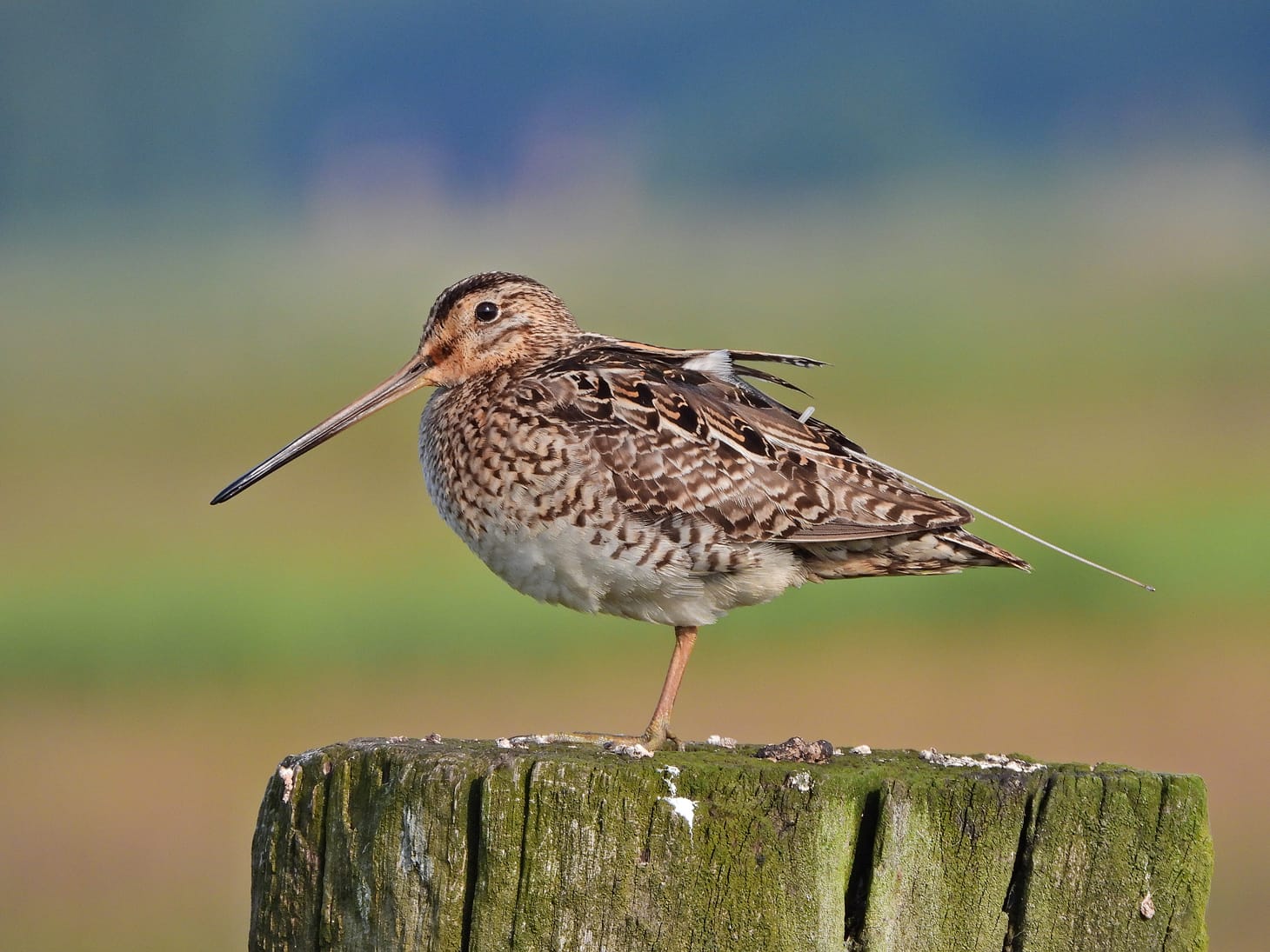
The Common Snipe is one of the most widespread waders in Eurasia, with an estimated global population of 12–17 million individuals. Despite these seemingly robust numbers, the species is experiencing a consistent decline across its entire range. In Germany alone, populations have fallen by more than 80% in the past two decades. The reasons behind this dramatic decline remain poorly understood, largely because only four published studies have examined migratory movements in detail—and most relied either on ringing recoveries or low‑resolution tracking technologies. High‑resolution GPS data, which are essential for identifying critical breeding areas, stopover sites and wintering grounds, are still almost entirely lacking. Because the species breeds across a wide geographical gradient—from Arctic regions such as Iceland and northern Eurasia to temperate wetlands in Germany and Eastern Europe—it serves as an ideal model for studying the combined effects of climate change and human pressures on wetland birds. Generating robust movement data therefore represents a crucial first step toward targeted conservation measures.
Measurable Progress in 2025
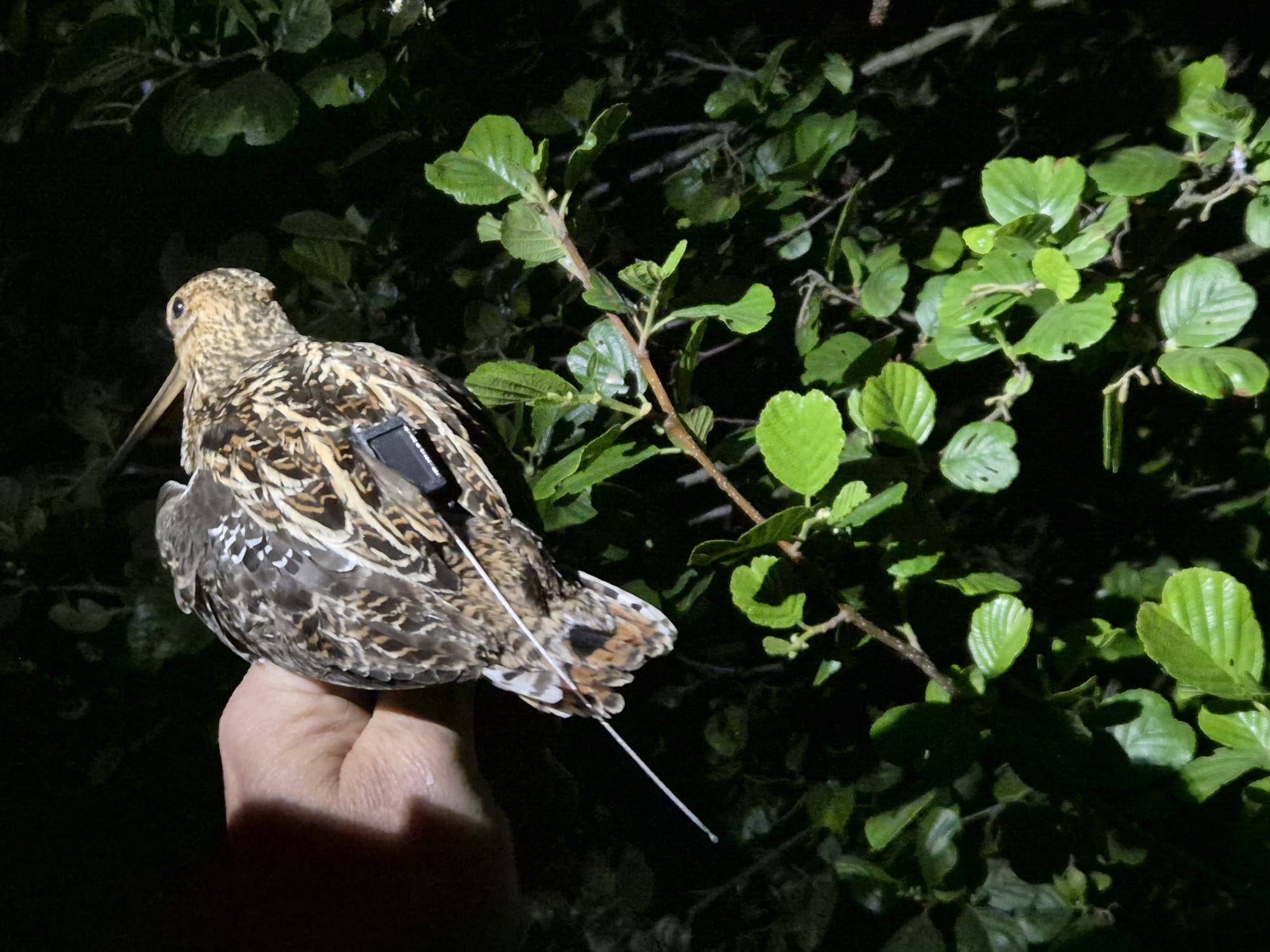
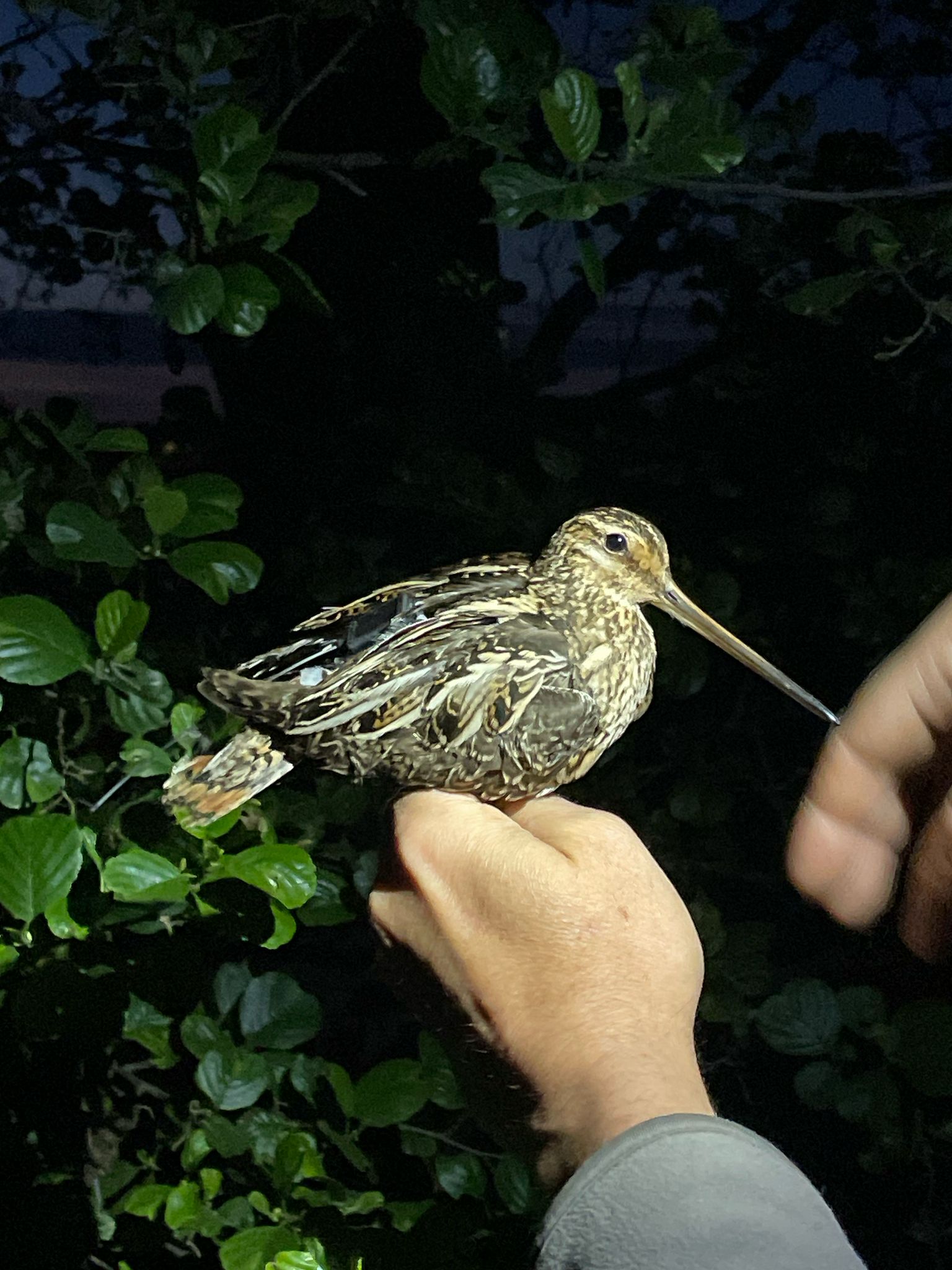
During the 2025 field season, the project succeeded in tagging 16 Common Snipes with GPS transmitters—far exceeding the original target of five. Six breeding adults were tagged in spring and early summer, and ten additional birds, consisting of five adults and five juveniles, were tagged later in the season. To support nest detection, five drone flights were carried out, and seven night catching sessions were completed. Migration routes were documented across six European countries, including the United Kingdom, Ireland, the Netherlands, France, Spain and Germany. Survival and migration status were recorded for all tagged birds until mid‑December 2025. The first insights were presented publicly at the 9th AEWA Meeting of the Parties in Bonn in November 2025.
Scientific Preparation and Permitting
The project officially launched in January 2025. All necessary permits for capturing and tagging birds in the Borgfelder Wümmewiesen nature reserve were obtained without delay. A comprehensive literature review reaffirmed the significant knowledge gaps surrounding Common Snipe migration: existing movement data are limited and of low resolution. Previous studies relied heavily on ring recoveries—such as one dataset in Poland that produced just 327 recoveries from 12,000 ringed birds over 20 years—or on geolocators and radio telemetry, which cannot provide the fine‑scale habitat insights needed to identify key threats or conservation priorities. This knowledge gap underscores the importance of the high‑resolution GPS tracking implemented through this project.
Fieldwork and Tagging in Bremen
Fieldwork began on 8 May 2025 in the Borgfelder Wümmewiesen. Although the season followed one of the driest springs ever recorded, stable water management within the reserve helped maintain suitable breeding conditions. On the first field day alone, four birds were successfully tagged. Two more were tagged on 20 May and 12 June, including one individual located near a nest detected by thermal drone imaging. In early August—during moulting and the pre‑migration period—a further ten birds were tagged. Expanding the sample size from the planned five to sixteen individuals significantly increased the scientific value and robustness of the dataset.
Migration Tracking and Initial Insights
Analysis of GPS data revealed considerable variation in behaviour and migration patterns. Breeding adults exhibited small, clearly defined movement ranges around their nesting and feeding sites, whereas two males ranged over several kilometres, likely because they were non‑breeders in 2025. Migration began in September, but the exact timing and routes varied greatly among individuals. Wintering destinations included the Netherlands, France, Ireland and Spain. Some birds completed their migration in a single night, while others used multiple stopover sites over several weeks. Remarkably, one bird remained at the study site until mid‑December. These diverse strategies demonstrate that birds originating from the same breeding area may rely on entirely different European wetland systems, reinforcing the need for internationally coordinated conservation approaches.
International Collaboration: Habitrack and the Iceland Partnership
The project is closely integrated with the EU Horizon Europe project Habitrack, led by Frédéric Jiguet of the Muséum National d’Histoire Naturelle in Paris. A Memorandum of Understanding was signed in 2025. Through this collaboration, all 16 GPS tags deployed in Bremen were provided by Habitrack, and the resulting data will be incorporated into a broader European dataset encompassing 14 huntable species. Partners at the University of Aveiro tagged nine Common Snipes in Iceland; all of these individuals migrated along remarkably similar routes to Ireland. The combined data from Germany, Iceland and other parts of Europe present a unique opportunity to analyse migration strategies and habitat use on a continental scale. Joint peer‑reviewed publications and coordinated genetic analyses are planned.
Overall Impact
The project exceeded its initial goals, tripling the original tagging target and greatly strengthening the scientific foundation for future conservation action. The first high‑resolution GPS data have revealed previously unknown diversity in migration timing, routes and wintering destinations, confirming that conservation strategies must address the entire annual cycle and span several European countries. The project also enhanced international cooperation and visibility, including through presentations at the AEWA conference and increased outreach on social media. The dataset generated in 2025 now forms a critical baseline for assessing the long‑term impacts of climate change on migratory wetland birds.
Outlook for 2026
In the coming year, focus will shift toward tracking returning adults to analyse breeding‑site fidelity, tagging additional adult breeders supported by VGP funding, and expanding collaboration with the Habitrack project with an emphasis on juvenile birds. Genetic sampling will help clarify population connectivity, while detailed analysis of stopover habitats will shed light on climate‑related drivers affecting migration strategies. By building a multi‑year, multinational dataset, the project will generate the scientific evidence needed to design targeted conservation strategies and mitigate both climate‑related and human‑induced threats to the Common Snipe across Europe.